
About me
Ciao! My name is Santina Fioritto. I’m a freshman at Wayne state university. I have been working at my family’s Italian restaurant for about 5 years now. Being Italian as well as working at my family’s restaurant has developed a deep appreciation for the Italian culture and cuisine! I am very excited to gain a better understanding for my much beloved culture.
Tastings
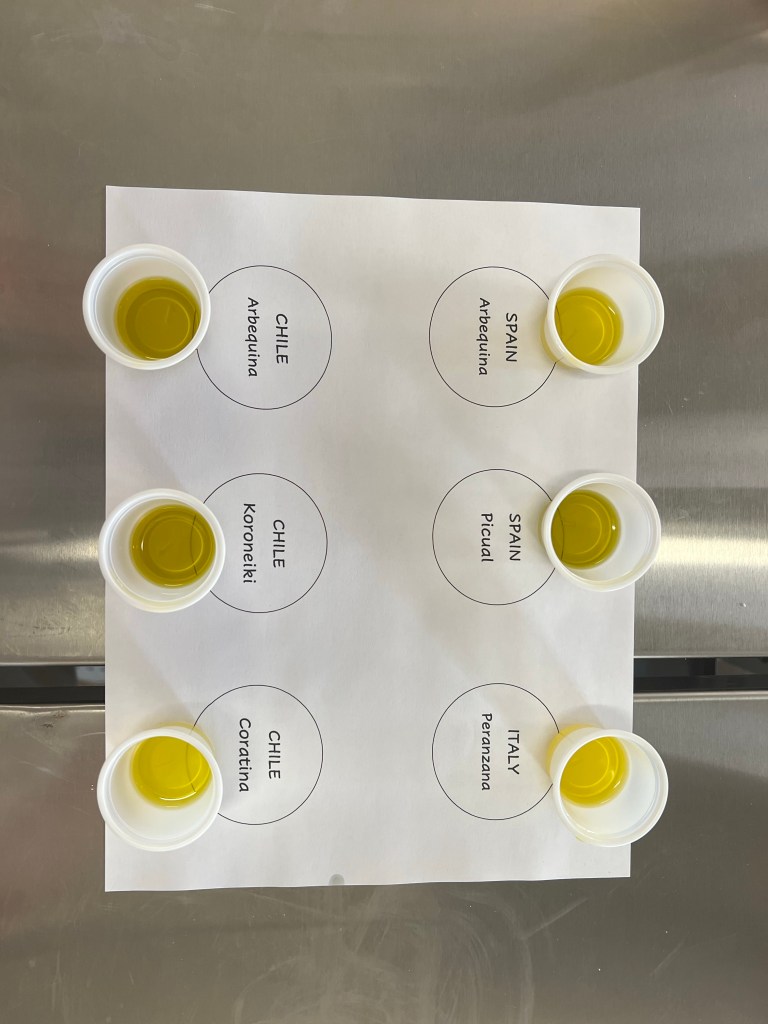
Olive oil tasting
Arbequina:Spain

This oil was a very mild bitter. It was delicate and peppery. It was slightly grassy and a hint of artichoke. It also had a mild, pleasant aroma.


Picual: Spain

This oil was a medium bitter. It was more spicy and intense. It was also more pungent, grassy and peppery. The aroma was pleasant and floral.


Peranzana: Italy

This oil was the strongest bitter and very intense. It was also grassy and pungent. It had cinnamon and mint flavors. The aroma was very strong.


Reflection:

Overall I found that the oils from Spain weren’t as strong as the oil from Italy. I also learned that the color of the oils doesn’t mean anything. I really enjoyed the whole experience. It was very fascinating to see the difference between oils from different countries. It was also interesting to learn which oils were best for different foods. I would have never thought an extra virgin olive oil would go with ice cream.      My personal favorite oil to drink was probably the Arbequina from Spain. Because it was the least bitter and the most pleasant out of the three.
Salt tasting
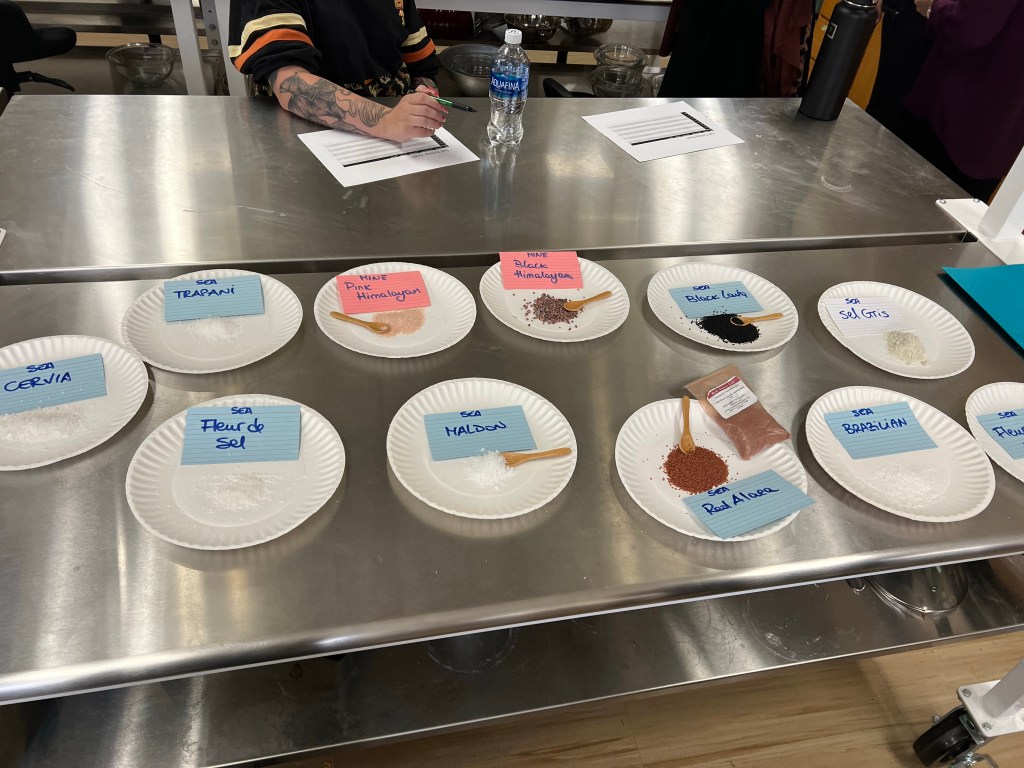
The salt Trapani was crystal like and clear. It has a rocky texture and the saltiness was pretty intense. The mine pink Himalayan was different shades of pink. The texture was fine and grainy. I really enjoyed this one, it wasn’t too intense and it was quite pleasant. The mine black Himalayan was very interesting. It was different shades of burnt reds and was like little pebbles. It has an eggy flavor. The sea Cervia was one of my favorites. It was white and crystal like. The saltiness was mild and pleasant. The sea black lava was black and rocky. It had a medium saltiness. The sea Sel Gris was very pleasant. It was a light grey, powdery, and soft. It had a pretty intense saltiness. The sea Fleur de Sel was white and grainy. It had a very intense saltiness. The sea Brazilian was clear and crystal like. It had a mild saltiness. The sea red Alea was very interesting as well. It was red and rocky. It has a smoky salty flavor. The sea Maldon was clear, and had a flaky crystal texture. The saltiness was very intense. After I tried all the salts I wasn’t feeling too hungry so I only tried one food combination. I tried the dark chocolate with the sea Maldon. I really enjoyed this food combination. The salt made the chocolate a lot less bitter and it was delicious. I noticed a difference between the salt that came from the sea and the salt that came from the mine. The sea salt has more of a intense, pure salt flavor. The mine salt, on the other hand, wasn’t as intense as the sea salt and some of them also had other flavor other than salt. I found it very interesting how wide of variations the flavor and color different salts have. I also didn’t know that there were even that many different kinds of salts. This tasting definitely changed my idea of salt. I realized how important salt is, not only for flavor but for healthy as well. I also learned how bad our table salt is and will now be changing the kind of salt I use. Now when choosing salt I will be looking for the most pure and least preserved salt.
Cheese Tasting
The cheese tasting was very interesting and a cool experience. It was very interesting how different ages of cheese completely transformed the cheese. Everything from the texture to the overall flavor changes, just based off of the age of the cheese. Also, depending on the type of animal the cheese is made from and what the animal eats, changes the flavor, texture, and smell of the cheese. This changed my idea on cheese because I realized how little my perspective on cheese is. From now on, I want to branch out and try variety of cheeses from different places, ages, and animals.
The Mary Parmigiano Reggiano is the king of the cheeses. It was the oldest of the ones we tried. It was hard and rough texture. It had a very strong and pleasant aroma The flavor was very strong and enjoyable.
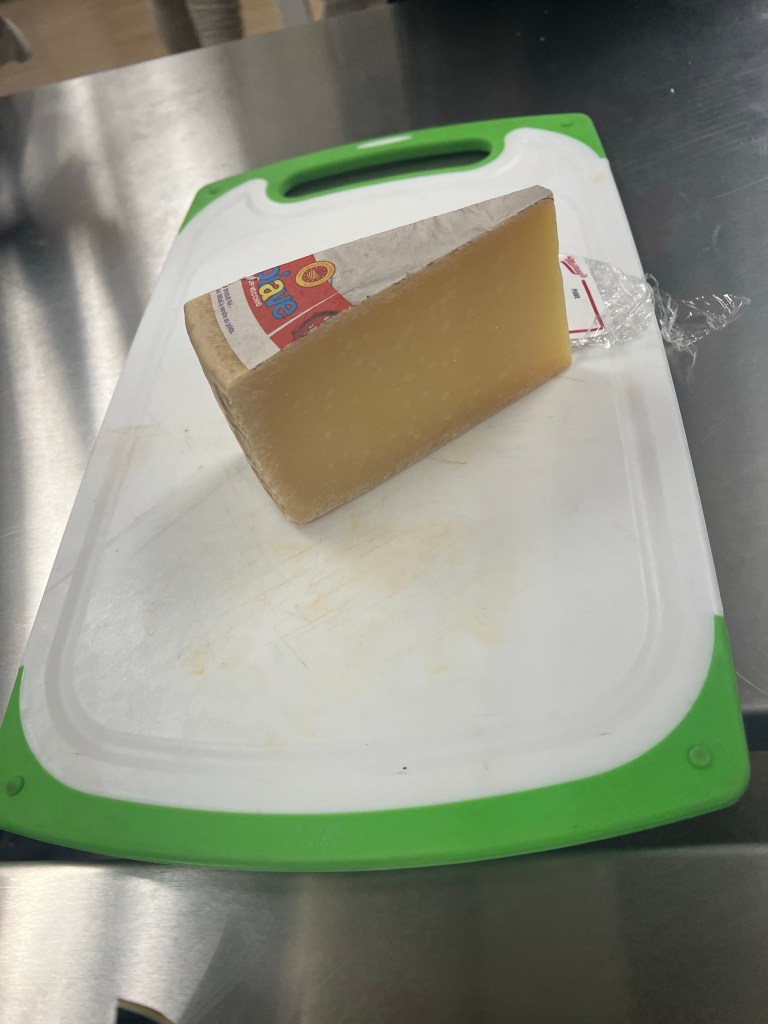
The Plave had a very sweet and almost fruity flavor. It was a light brown color with little bubbles. It had a hard texture and a pleasant aroma.
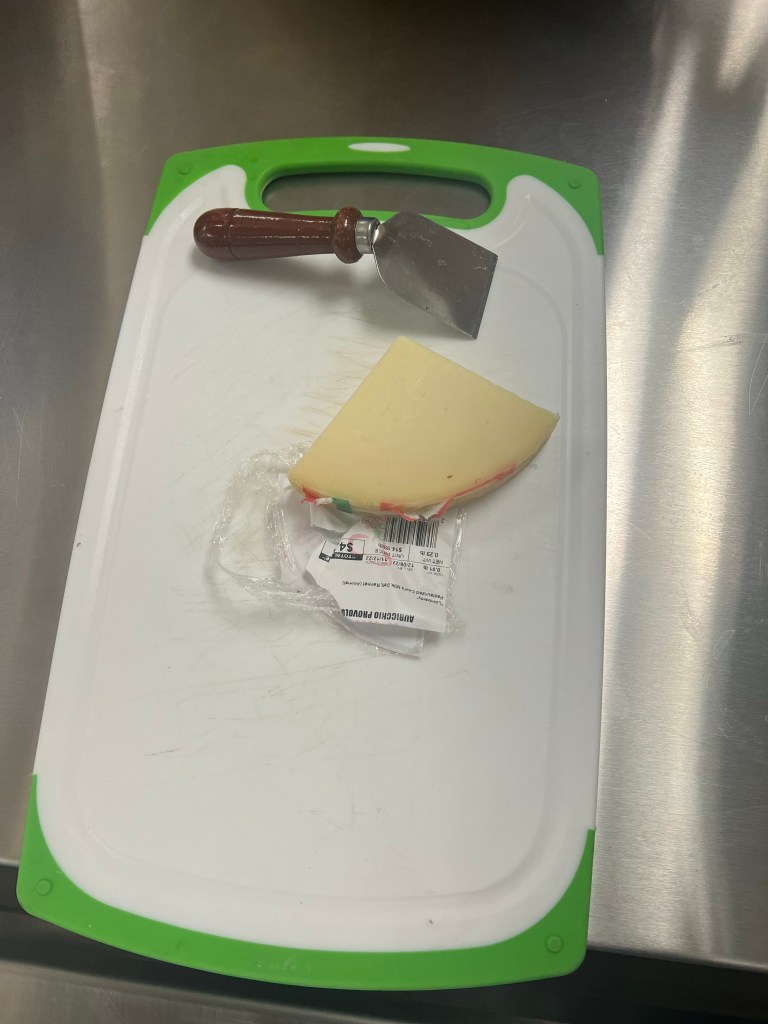
The Auricchio Provolone had a very strong, sharp flavor. It was a light cream color and was very hard and smooth.
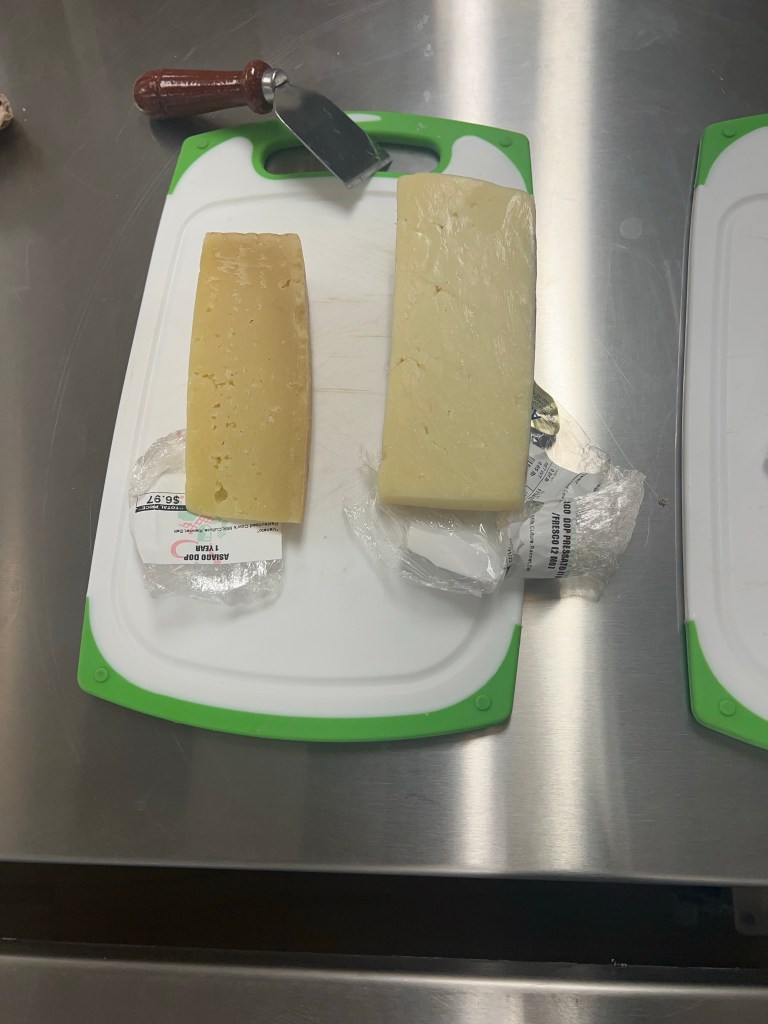
The Asiago DOP was one year old. The color was darker and a light brown shade. It had a hard texture. It had a strong aroma. The flavor was salty and kind of moldy.
The Asiago DOP Pressato was more fresh. It had a lighter color and was very soft. It had a very pleasant, fruity aroma. The flavor was er pleasant and salty.
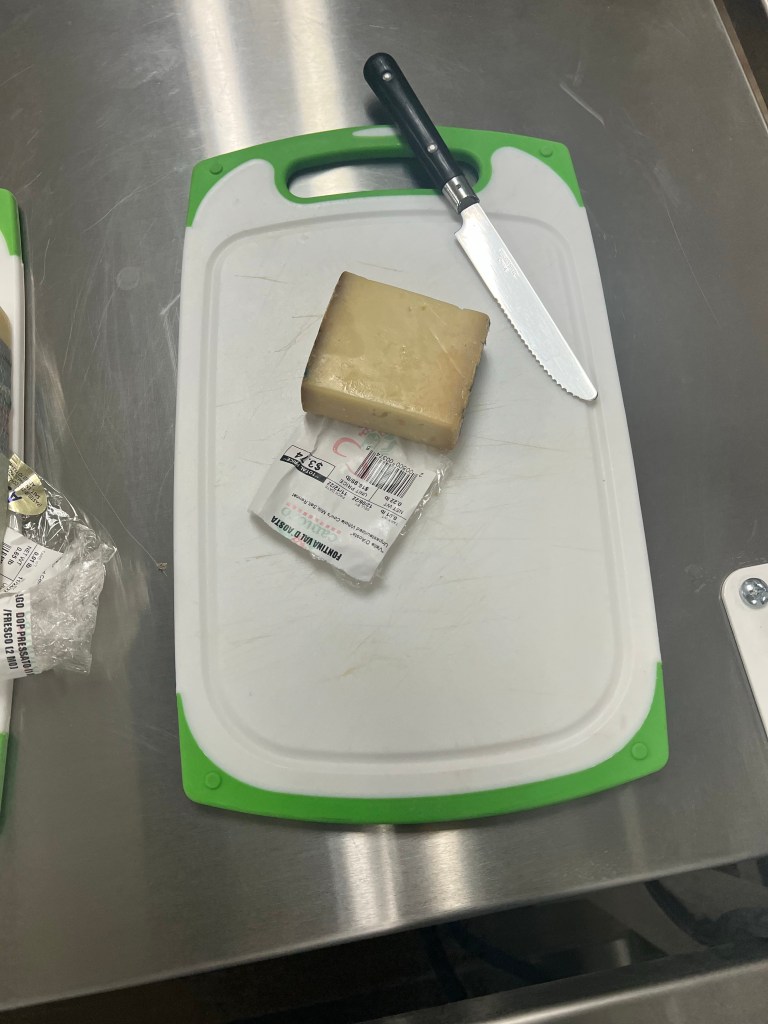
The Fontina Val D’Aosta was a dark cream color. It had a hard, smooth texture. The smell was very pleasant. The flavor was very earthy.
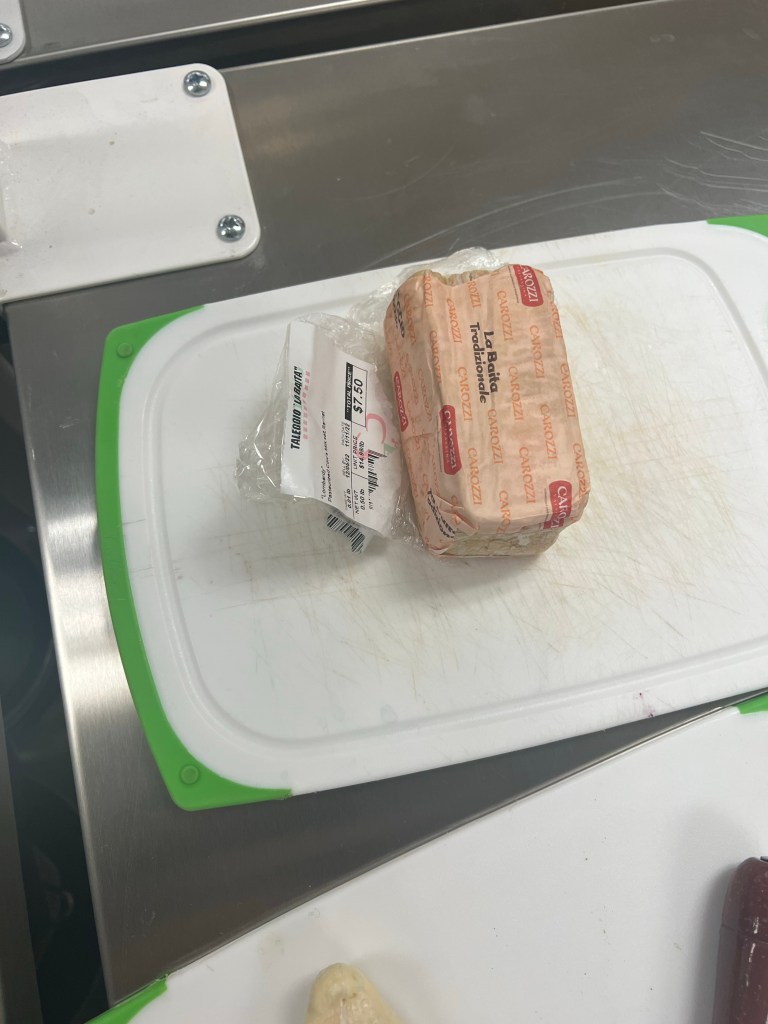
The Ta Leggio La Baita had a pleasant aroma. The color was light cream with specks of white. It had a very soft texture. The flavor was earthy and pleasant.
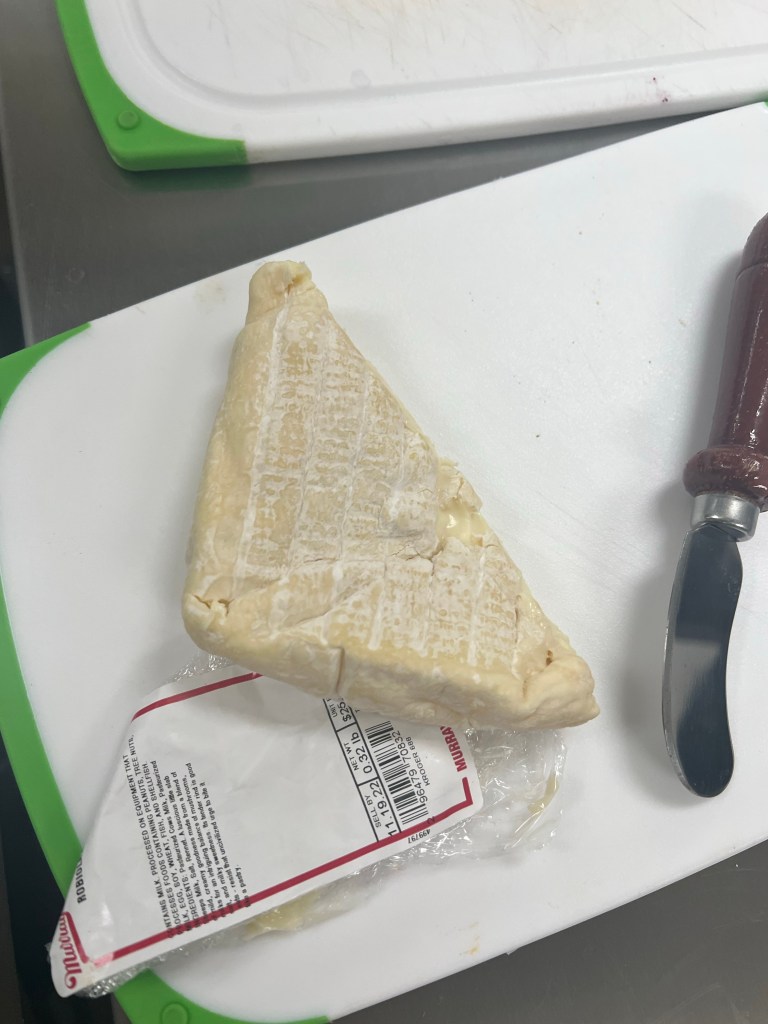
The Robiola Bosiha was extremely soft and gooey. The color was light cream with specks of white. It had a extremely strong, moldy smell. The flavor was very intense and almost moldy. It was made from sheep and cow.
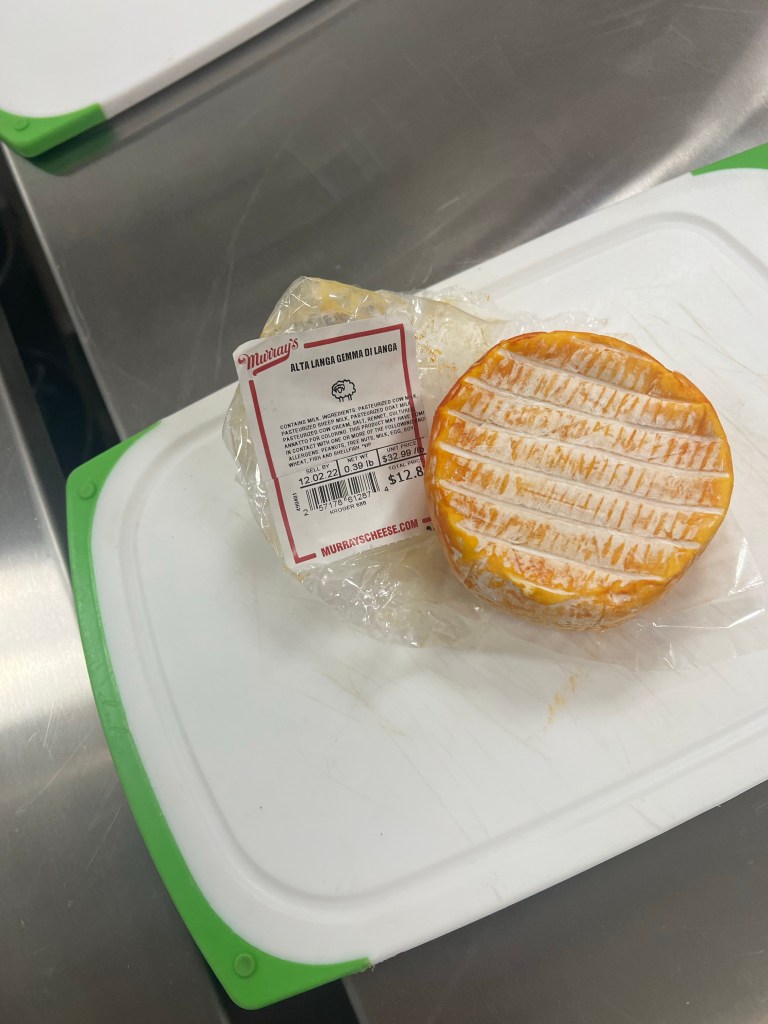
The Alta Langa Gemma Di Langa was mostly orange with some parts white. It was very soft and had a very strong smell. The flavor was unpleasant and moldy. This was the youngest cheese and was a combination of three cheeses.
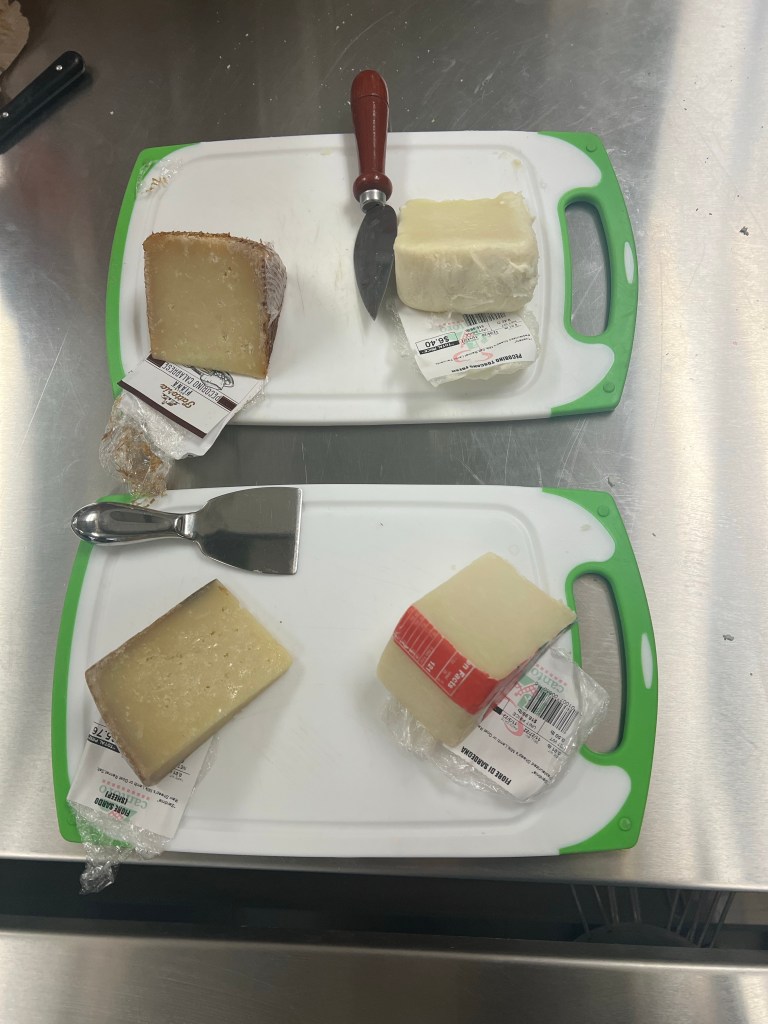
The Fiore Sardo was made from sheep. It was a dark cream color with small bubbles. It had a hard texture. The aroma was pleasant and medium. The flavor was salty and moldy.
The Fiore Di Sardegna was a light cream color. It had a medium-hard and smooth texture. It had a intense, pleasant aroma. The flavor was very pleasant and salty.
The Pecorino Toscana was white and very soft. The smell was strong and pleasant. The flavor was pleasant and salty.
The Pecorino Calabrese was aged one year. The color was dark cream and it had a hard texture. The smell was very intense and strong. The labor was very intense, earthy , and salty.

Recipes
Artusi’s sauce recipe:

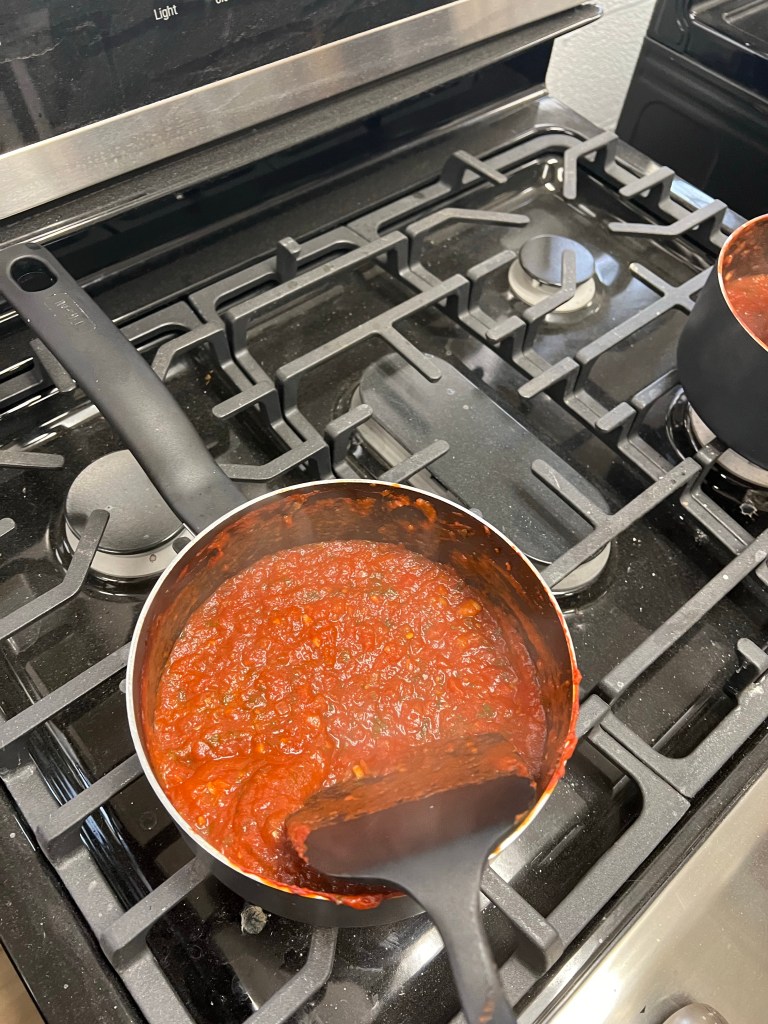
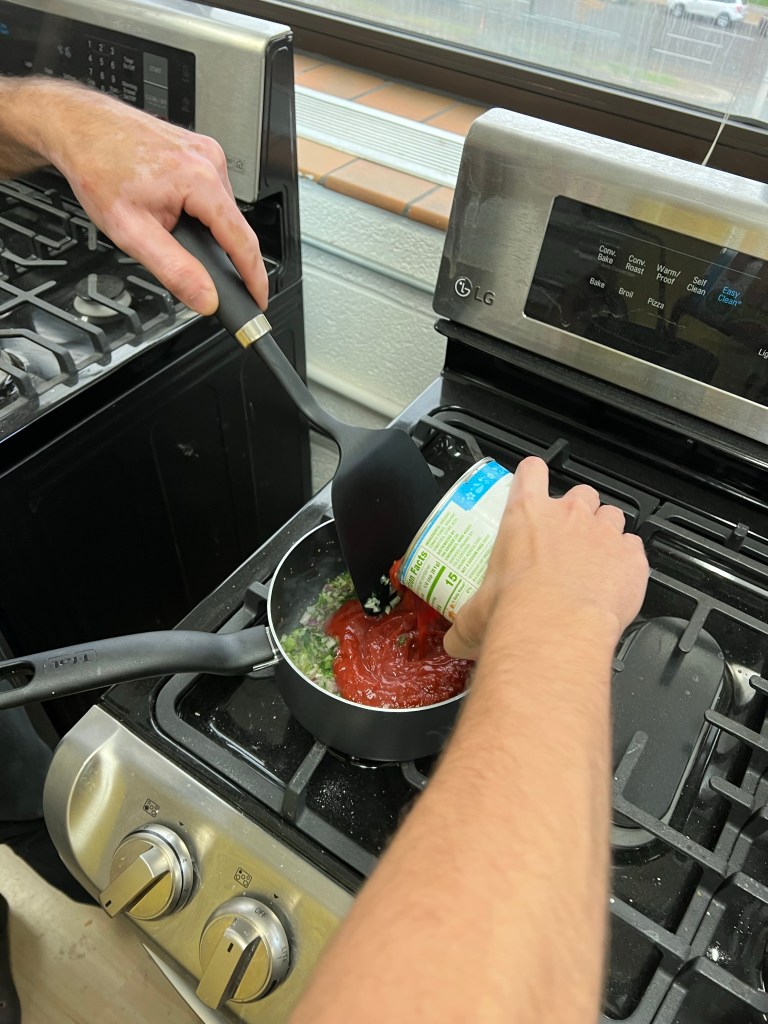
To make Artusi’s tomato sauce you start by gathering all the ingredients. You will need 7 to 8 tomatoes, a quarter of an onion, a cloves of a garlic, a finger-length stalk of celery, a few basil leaves, sufficient amount of parsley, olive oil, and salt and pepper. Make sure all your vegetables are washed and start chopping. Finely chop your onion, garlic, celery, basil, and parsley. Then put it in a pan and season it with olive oil and salt and pepper. Next, mash your tomatoes and add them to the pan. Turn the fire on and stir occasionally. Once the sauce starts to thicken put it through a sieve and it is ready to be served. This sauce was very fun and surprisingly very easy to make. The final result for our sauce was very good in my opinion. I would definitely love to make this sauce again in the future. When my family makes tomato sauce they usually use carrots as well and they let the vegetables sauté before adding the tomatoes. It was really fun making the sauce and chopping all the vegetables. The smell of cooking the sauce was delicious and made me really hungry. Overall, the entire experience was very interesting and enjoyable!
Pasta recipe:
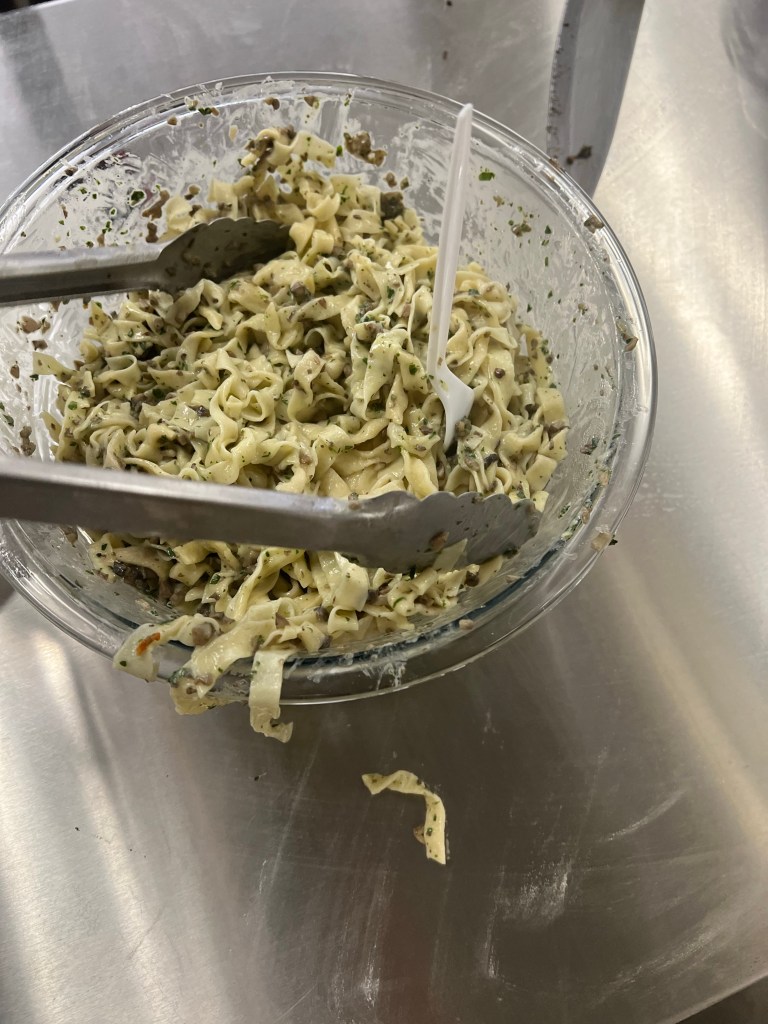
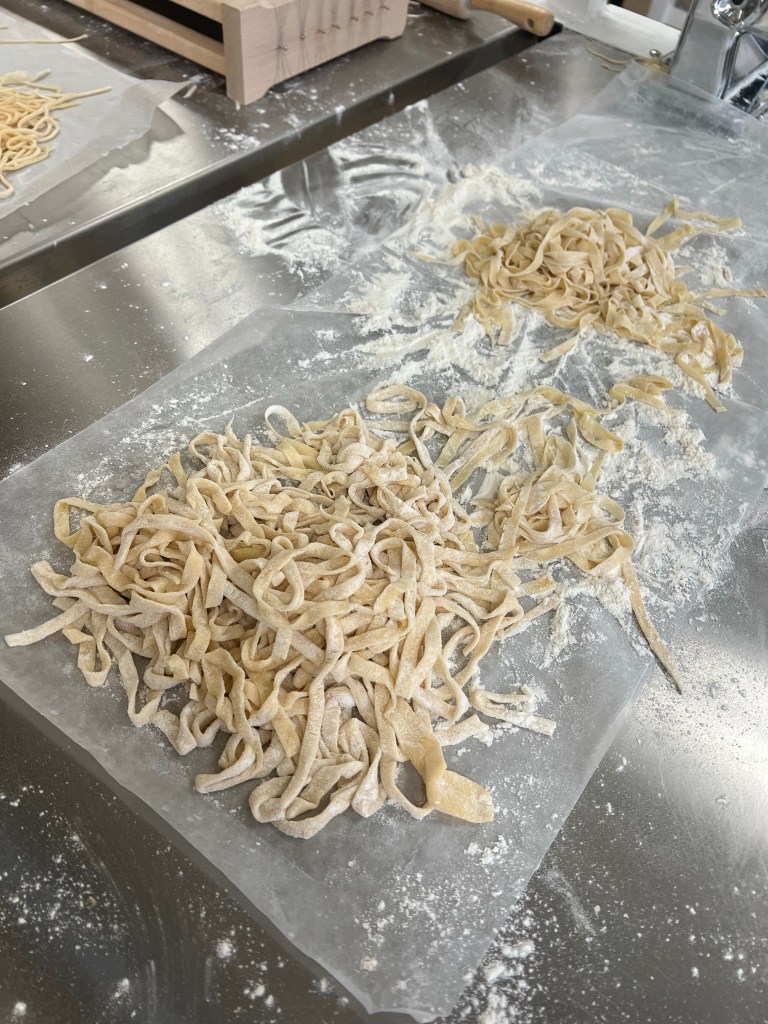
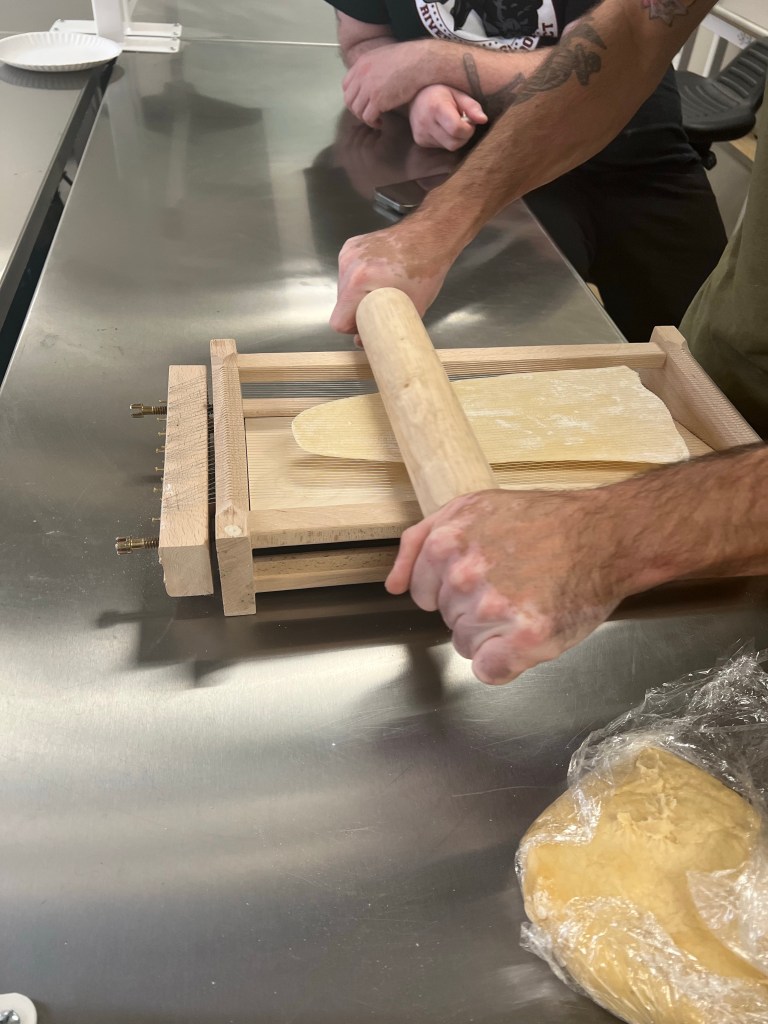
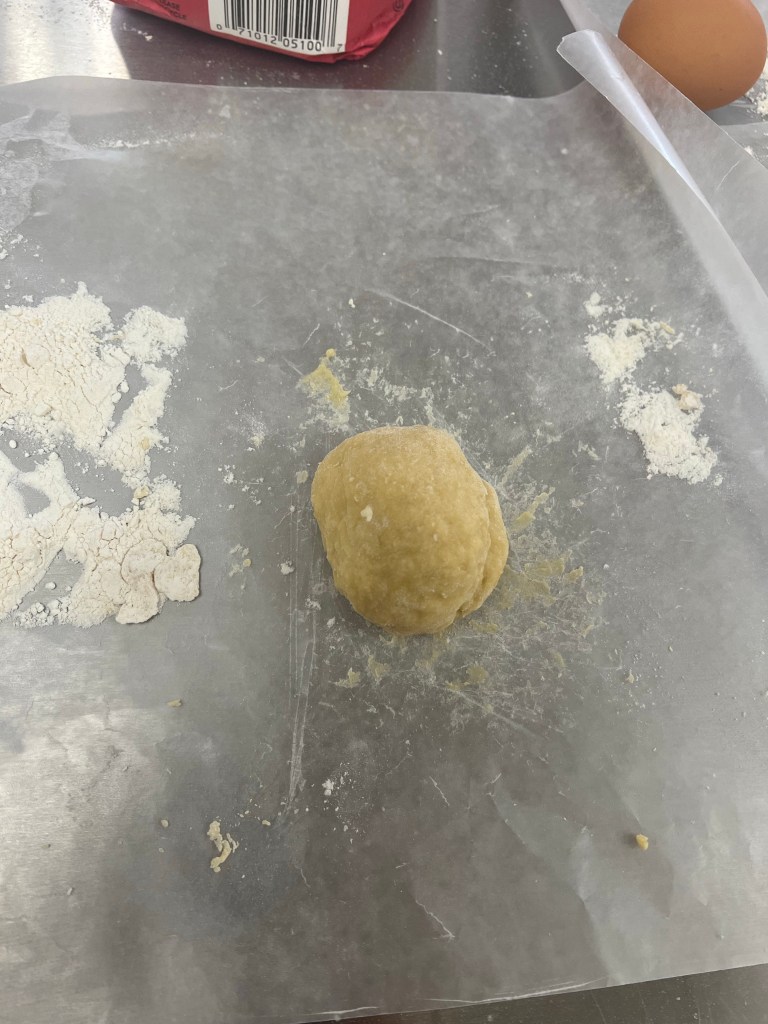
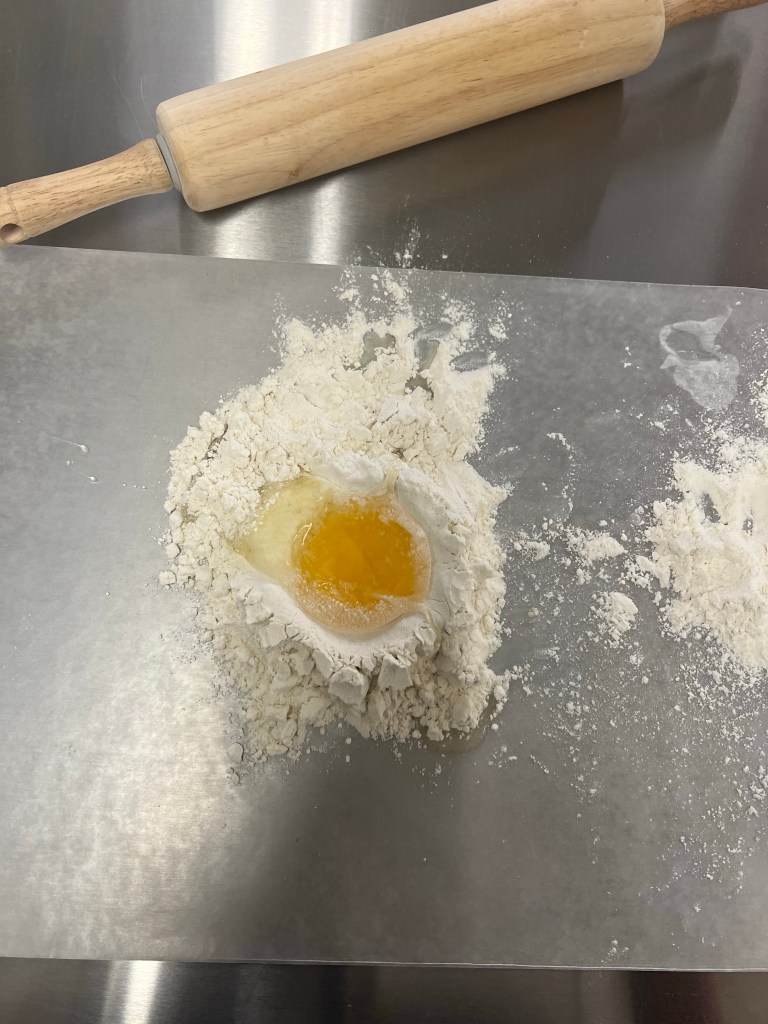
We first gathered all of the ingredients. We were given about 100g of flour, one egg, and some salt. We made a hole in the flour to crack the egg in and added some salt as well. Then we began to mix the egg with the flour with our finger, until we were able to start kneading it with our hands. After everything was kneaded together we wrapped out dough and placed it in the fridge for a half hour. Then we got the pasta roller and cutter and started to roll out the dough. You start on the first level to roll your dough. Make sure there is enough flour on the dough so it won’t get stuck. After the first time you roll it, fold it and do it again. Repeat this process once more. Then, you can start stretching out your dough, increasing the level each time. If the dough gets to long for you to handle you can cut it in half. Once you complete level 6 you can cut you pasta to either fettuccini or spaghetti. Leave you cut noodles to dry for a couple of minutes and then place them into boiling water for a few minutes. Overall I would say this recipe was relatively easy. I did not have any problems during the preparation. I really enjoyed the final result and I would love to make pasta again in the future.
Reflection paper
This class has easily been my favorite class I have ever taken. It was very interesting learning more about my culture and the evolution of the Mediterranean diet. I have learned many important skills about Italian cuisine and a proper diet. Such as how to make tomato sauce, and the importance of quality salt in your everyday diet. I am looking forward to applying what I learned in this class every day. Whether it be, making home made pasta, or choosing what olive oil to buy at the store.


One thing I learned about in this class, is the Columbian Exchange. The Columbian Exchange was an exchange between the Old World and New World, in 1492. Their was an exchange of crops, ideas, and diseases. Through the Columbian Exchange, the Old World  gained many important crops. Such as, potatoes, corn, tomatoes, and pineapple. This exchange also allowed for many Old World crops, such as sugar and coffee, to be produced on New Word soil. Allowing for more production of sugar and coffee. The birth of the infamous dish, Spaghetti al Pomodoro, was also a bi-product of the Columbian Exchange. The exchange also led to a spread of diseases, such as the Black Death, smallpox, measles, and typhus..


Another thing I learned about was the first cookbook ever written. The first printed cook book was in 1475, by Bartolomeo Platina. His book was called De Honesta Valuptate et Valetitudine. Another famous cook book was The Opera, written by Bartolomeo Scappi. This book has over 1000 recipes and has six volumes. It is the first know illustrated cook book and contains the first illustration of a fork. He talks about menus and banquets during the renaissance, as well as how a kitchen looks at that time. The Opera is one of the most important and groundbreaking Italian cookbooks.


In this class, we also learned about Galen and his dietary system. Galen was a personal physician to Marcus Aurelius, the Roman Emperor. He developed a dietary system that influenced Europeans eating habits for thousands of years. This system contained for essential humors that should always be in balance. These humors include; blood, phlegm, choler, and black bile or melancholy. If these humors are not in balance, you are recommended to eat foods that will counteract the imbalance. Foods were used as medicine, and used to maintain a balanced diet.


One thing I think differently about in my own diet after this course, is the beauty of combining certain foods. By combining different foods you are able to intensify your whole food experience. An example of a food combination we learned in class was Garum. Garum was a fermented fish sauce used to give food more flavor. Some food combinations I use in my everyday life are, grapes and cheese, ice cream and French fries,  and apples and peanut butter.


Another thing I think differently about in my own diet after this course, is the kind of salt and olive oil I choose to purchase. From the olive oil tasting I learned the importance of good extra virgin olive oil. Good oil should smell fresh and almost fruity. Extra virgin olive oil should also only be purchased within about a year of its harvest taste. From the olive oil tasting I discovered my new favorite oil, the Arbequina from Spain. From the salt tasing I learned how bad our table salt is for your health. I now never use table salt, and instead turn to pink Himalayan or, my personal favorite, the Sea Sel Gris.


Being raised in a very Italian household, many of my ideas about food and gastronomy align pretty well to the practices and traditions presented in this course. My food is very deeply rooted into my culture and pretty much every family function revolves around the food being served. Everyday, we eat dinner as a family, and all take part in the preparation process. Being that it is the 21st century  the amount of processed foods continue to grow. I do have to admit that I sometimes find myself eating fast food, and not appreciating the Slow Food Movement. Learning about this movement has truly opened my eyes and made me appreciate the home-cooked meals I get to share with my family.


In conclusion, this class has brought me many wonderful learning experience that I will use all my life. It has taught me about many significant things throughout the history of the Italian cuisine. I got to learn about the Columbian Exchange and the evolution of cookbooks. This class has also opened my eyes to many different salts, cheeses, and oils.
 Science, history, and culture and Italian cuisine E-portfolio (bundle A)